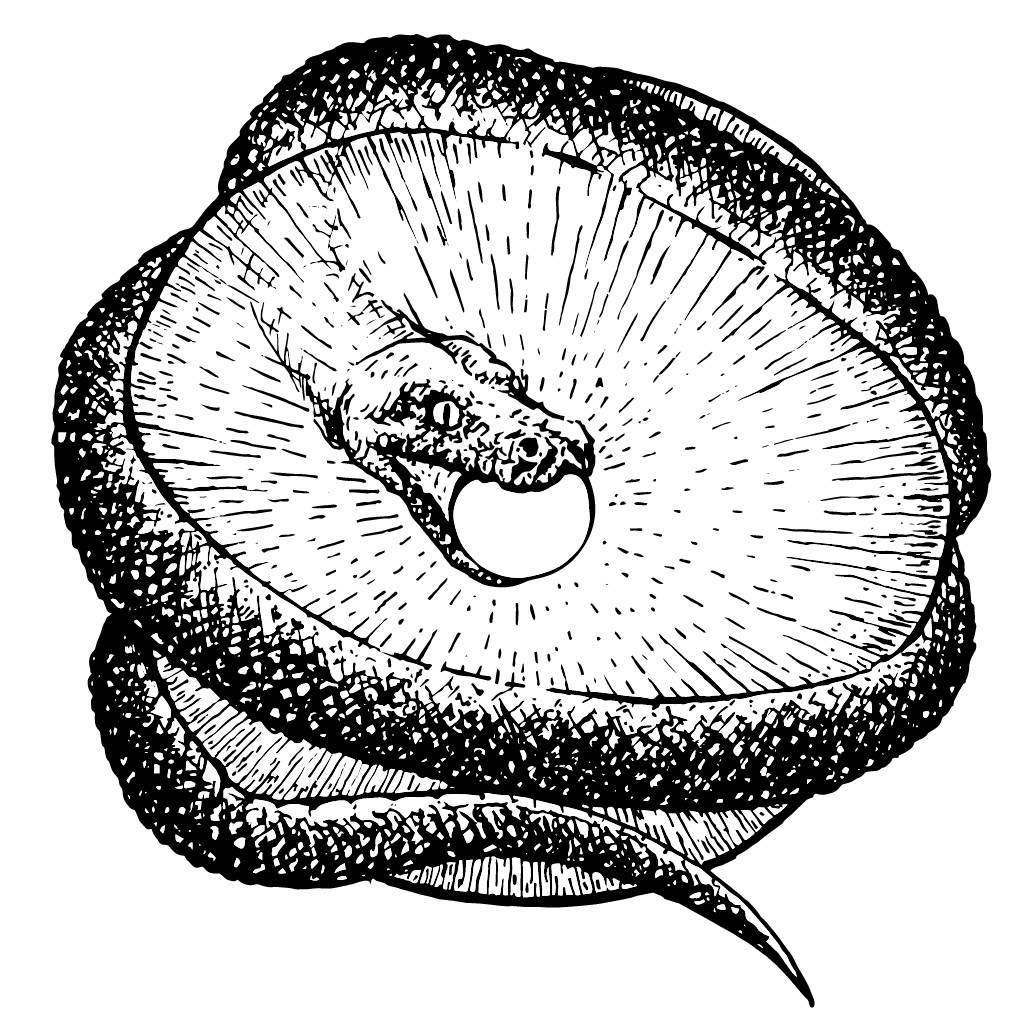
⁎ On getting things right and getting them wrong: every truth is pareidolic, but it is also algebraic, that is: representations can be replaced by others, their theoretical labels are only perspectives replaceable by others; we see this, for example, in the fact that human beings throughout history survived with the cultural—technical level reached up to that point; that is why, amid the well-being achieved by the United States or Europe, humanity feels malaise; exaggerations balance out, the invisible reveals itself, the easy way or the hard way.
⁎ Nature coincides down to its tiniest details; far more real than causes are things—these are full of imponderables that are there without our having yet seen or thought them; when something becomes visible for the “first time,” as happened at Los Alamos or is happening today with artificial intelligence, some are dismayed, others see it as providential.
⁎ Arithmetic is a subset of algebra but not the reverse (at least for a limited perspective like the human one): things are algebraic, perspectives (partialities) arithmetic; on this rests the double light that illuminates both Saint Paul’s perspective and the excess of concretization and literality: they assume that things, reality for example, are univocal like arithmetic, but at least for us they are so as algebra.
⁎ On parabolas, let’s be concrete about it, but in the «correct» way. A semicircle shows us only two invisible points, where we come from and where we’re going; the rest is visible; because then…
⁎ The whole problem of the classical and the quantum, of superstition, of the esoteric and exoteric, rests on this “error”: the concrete and precision are treated as arithmetic when they are algebraic.
⁎ We see the same thing happen in dreams and their interpretation: as Heraclitus saw, truth is present in things, not in their causes; it is their music, their concrete spectrum (algebra), not their current range, that remains.
With the arithmetic, with the presence of something, its algebra also comes masked; this makes measurement an art, which like every art is transcendent.
Nature coincides down to its smallest details, but in things this includes everything we fail to take into account—arithmetic.
In surrealism «what demands stylistic treatment is precisely precision,» and this is the strangest thing of all: we do not err only because of our prejudices or original sin; it is with them and through them that we also get things right: we contribute an algebra we still do not yet recognize. Hence we ruin things when we try to stop the inevitable. The origin cannot be excluded without cost.
This shows how the Manichaean distinction, as Nietzsche saw well, can be problematic; it is crude and problematic.
Here lies the challenge of human problems; they are algebraic, not arithmetic. This is also what the contraindication to metaphysical explorations consists in: one introduces arithmetic observations into an algebraic sphere; the same happens with the need to respect the innate, «it takes much more than a brilliant optic to see, and that optic is determined by many more things than we have seen or been able to measure up to now; this interference introduces problems; hence one always pays a toll, for example the one Prometheus paid: it is a problem of the spectrum’s incompleteness.
The same applies to healing: the enemy is attacked with arithmetic, with defamation, with swords and arrows, and is defeated with algebra, with new images once others collapse on us,» with wishful thinking, with pareidolia, with truth.
«First we encounter things,» then causes: things are algebraic, causes arithmetic.
Hence the stupidity of despising the material, but also the fact that what has been visible to us so far of matter is too arithmetic; it keeps its reserves, let us not be too arithmetic.
Goethe quote about, after absorbing everything the symbol leaves us, contemplation, closing the eyes.
In this respect it is important to understand what Jünger says regarding his The Worker:
Jünger quote about transmitting images being harder than transmitting thoughts
That the spectrum dominates the range, depending on how broad the range is, shows us the weights we really have to lift in order to achieve something; that is what determines the probability of something, of achieving something, and wherever something is unlikely to happen we are dealing with a range of lesser spectrum than necessary.
In this respect, what does it mean that one finds oneself unable to forgive if the other does not ask forgiveness? Is this how the sick person becomes sick, how he infects? What is the alchemist’s trick we have to perform here? Perhaps, as happened with many alchemists, we are allowed to have hope here; perhaps even an error will free us from error.
Nothing impoverishes the gaze as much as the crudely arithmetic perspective; as soon as algebra is restored, the same thing happens to us that happened to Leibniz: we begin to see this as the best of all possible worlds; to include parts of the spectrum that were not in our range.
You cannot be today like those of the past, but you can be more like those of always.
The enemy is attacked, arithmetized.
In great confrontations it is spectra that fight on one side and the other; «a battle may be lost before it begins; what to do when so much waging war frees the enemy, as the Cold War grants him his place as an equal?
The political type is looking for the opportunity all the same.
Waging war frees the enemy Doing nothing forces us to treat him as an equal
And yet the war seems to have been won by the United States, or is this a superficial view? This has to do with the respect deserved even by the widow and her oval; swallow or perish; is equality so terrible?: and in any case wouldn’t we rather have to live in the United States than have to do so in the land of the Hyperboreans?: Nietzsche preferred the latter?, but not as a home?
In delirium the preeminence of the spectrum over the range becomes visible; understanding is lacking, perhaps conformality alone is not enough, just one symbol?
To visually represent truths like this, any image will do; it is true in all of them, hence the AI slop in each of them: things first, then causes; I think this is what the intuition of slop we see in works of artificial intelligence is based on—it triumphs first in work
Insert quote about the atomic bomb as a crude invention
Works are children, the result of a conception, but they are also children among others, as all children are; this explains the value the Church found in distinguishing Jesus from the other children; the same happens in a piece of writing with punctuation marks.
Insert Jünger quote about punctuation
What characterizes weak minds is the overvaluing of small signs: everyone senses that everything is a symbol, but they do not recognize that not every symbol is equally comprehensive; hence how superstitious they are, they prefer having their cards read to making their range more comprehensive; they do not recognize that all radiation is within the whole, is a subset or part of it; every stupidity is redeemed, but stupidity is stupidity; thanks to the spectrum, even the tiniest range subsists.
We notice the preeminence of the spectrum in our wrong conclusions
The water is the spectrum, the fish arithmetic; we experience it in our errors, which is odd because it is something we see on any street corner. We realize it when the final reckoning shows us that someone is being more comprehensive; he is right.
Excess arithmetic = blowing your powder too soon.
Totality may be arithmetic, but as totality; one thing is to have arrived, another to pretend to.
Repentance is not only recognizing an error: it is natural to every range that is not spectrum; partial spectrum is a contradiction in terms.