“In any case, the man who is a friend of the Muses will have to expose himself, but he should not get involved. Either perish or enter the central building. In that way the man who suffers becomes the man who directs. He does not adapt himself to the plan, but he can modify it. His optimism reaches beyond all horrors.”
⁎ If we see the parabola as Plato perhaps saw it, geometrically, as a semicircle, there are only two invisible points; the rest of the outline of the parabola is the illuminated part of life; those two points we can call the transcendent points: the beyond and the this-side of them, this side of dawn and beyond dusk.
But the experience of reality (or is it only an ideal experience, based more on the causes than on the things this mirage produces, since in the night of the earth there is moonlight, starlight, and on earth we can light a candle) changes if that parabola were reflected in a lake, as happens on «occasions» when the sky or the mountains are reflected in a lake; there the semicircle is a circle, a simulation of completeness.
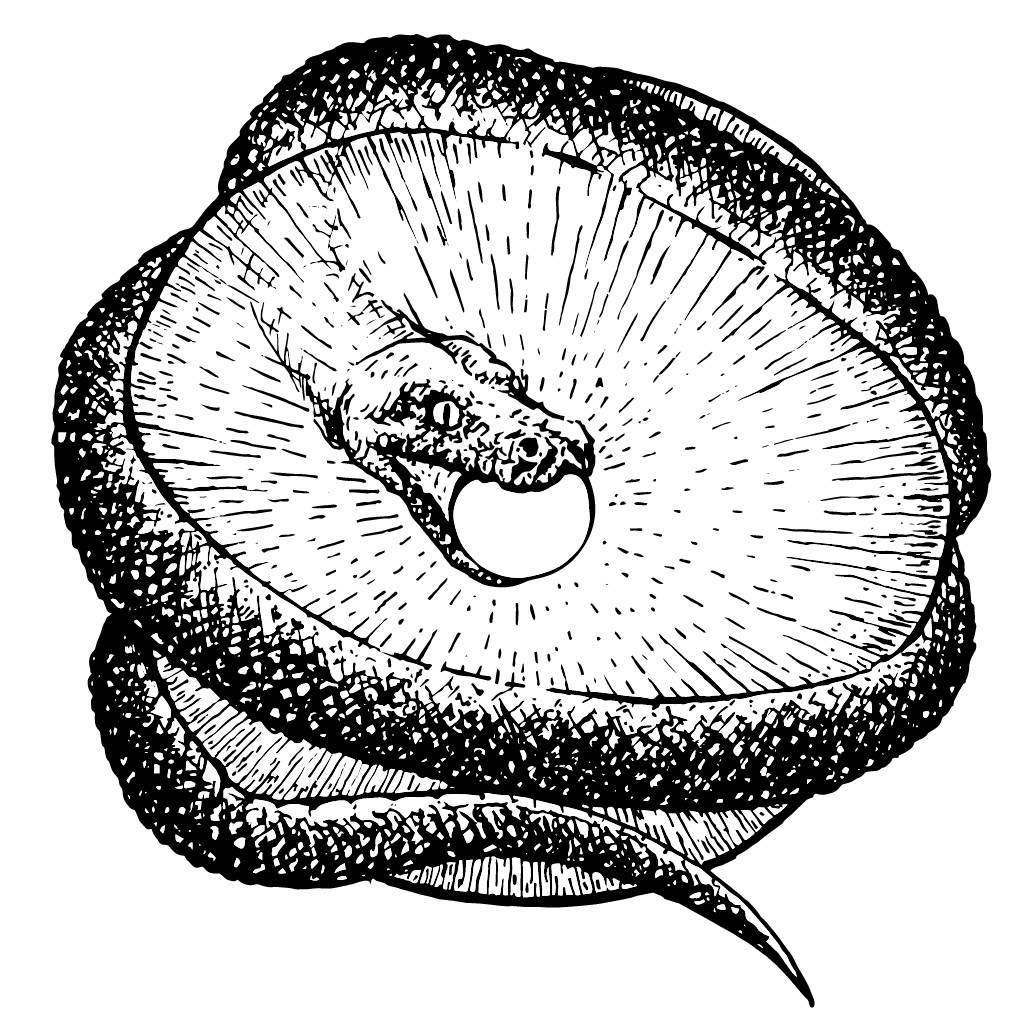
If instead of parabolas we think in circles, there is no dusk or dawn; what was once transcendent for the one traveling the outline of the parabola no longer is. Of course there, continuity without transcendence is «the flash of the vita serpent,» a reflection of oneself in the mirror; the mirror itself is reflected there in a mirage, but it still serves as a parable; there must be something of the sort in the totality of reality, perhaps.
«Dusk and dawn are a matter of perspective; not only is dawn in one place dusk in another, perhaps, as Nietzsche proposed in his eternal return, using absolute time as a reference, the circle in reality is complete, only we see it partially.
⁎ Bad reading, even of oneself: «one must, to the same extent that one imposes, have the capacity to receive»; what good is it to read a passage or a situation if we are not first going to receive all the information radiated by what we contemplate? Otherwise we would be like blind people reading; only then can we judge the effect it had on us and its value.
“On self-criticism: the author reading a text of his own that he has forgotten: If someone else had written it, it would be good.”
⁎ One thing is loving oneself, having reverence for oneself; another thing is loving yourself more than you are worth. In the first case one values oneself; in the second one despises oneself and compensates «that desire that clings to a lack» with complacency without merit.
Perhaps «complacency without merit» comes from failing to recognize that the complete circle is composed, in its second half, of a reflection; perhaps complacency without merit and the mirage (a literal overvaluation of the reflection of the parabola).
Complacency without merit is an error of interpretation: one sees as complete what is in reality only the reflection of the same half. Complacency without merit results in the mirage.
⁎ On exposure, on the value of living dangerously: evading it can take the form of an inability to let go, an inability to let go of the work; even if one has already revised a piece of writing again and again, the suspicion remains that there will be some errors in it, and one ends up not exposing the work, and oneself through the work; but that oneself is part of the problem: the work is still treated as an organ, not as fruit; perhaps such a person aspires to a union with the world—there is no doubt that something of this is involved there.
But how long can one go on developing organs? What relation does this have to crystallization, to the lack of crystallization? There is a search for perfection in the refusal of exposure: the refusal of exposure is linked to the relation between organ and fruit, and this is related to the fact that the «logos today is established on the material plane»; one has to enter that enclosure, otherwise one perishes, but at the same time one must not get involved»; «then the man who suffers becomes the man who directs.»
What in the perspective of the creator of organs has to change for him to begin creating fruit, to bear fruit?
⁎ Grossly materialistic people mask their spiritual poverty as economic poverty, hence the unnecessary surgeries, the gap between how they think things are and how they really are; perhaps this is a more fundamental cause of economic poverty than all the chatter of politics—which by its nature treats elevated ideas belatedly.
⁎ Moving from the creation of organs to the creation of fruits requires shifting the center of gravity, the genesis, the seed, from the self to the work; this is achieved through falsifiability, by taking a risk; there, nameless faith necessarily takes on a name, takes on qualities of hope, no longer does everything depend on us; but if the seed is to have a future we must experience this: in acting we can only get the execution wrong; the seed will fail to come through only if it is executed badly; if it is executed well, it is a seed we know will fall on good soil;
⁎ But we represent only what was granted to us; we do not execute it. This can be seen clearly in fire, in every campfire: «existence is only a complement of the possible.»
⁎ On the Cainite: «the murderer, on the other side, walks arm in arm with his victim»—Blake; «in the murderer a suicide lies hidden»—Jünger. That is: the Cainite grows until it reaches a point at which the artist can no longer go on creating organs, and begins to bear fruit and to create works.
This shows that that passage of the center of gravity into creation involves a danger, a taking on of danger; even inheritance, if it is to be healthy like nature, needs a certain degree of disconnection.
⁎ Language is like a sounding board, something fleeting that encapsulates what we feel and experience. Nietzsche called faith in reason faith in governesses; Jünger wants to draw a clear line between sensory perception and rational perception.
“Zipper-thinker. The buttons are missing: that is, the causal relation in the philosophical text and the leaps in the narrative one.”
⁎ Sensory perception—perhaps Nietzsche is right—does not deceive; our eyes did not tell us the sun revolved around the earth, reason did. I think it is the senses, in turn, that center us; reason, by contrast, keeps insisting on locating us, as if it needed to pin things down too much (needing in a double sense: a need for precision because it lacks precision, and needing in the sense of demanding; reason is too demanding. Xz
“All our knowledge is based on sensations.
Every man is at the center of the world and beneath the center of his hemisphere and above the center of this world.
⁎ Where sense, sensations, and the senses prevail, one sees figures; where rational perception and reason prevail, one understands thoughts; at the end of his life Goethe seems to care more about seeing figures; the hypertrophy of reason leads to a precision «that does not strengthen life but attacks it.»
⁎ Failure is failure; it is not worth calling it a step toward success, since although it surely was, it is evidence that you did not know where you were going; «the one who does not know where he is going goes farther,» so why not act according to the facts instead, and stop pretending in this regard at every moment.
References
- Ernst Jünger — Maxims and Minims for The Worker.
In any case, the man who is a friend of the Muses will have to expose himself, but he should not get involved. Either perish or enter the central building. In that way the man who suffers becomes the man who directs. He does not adapt himself to the plan, but he can modify it. His optimism reaches beyond all horrors.
- Ernst Jünger — After Seventy, Diary V (1991 -1996)
«On self-criticism: the author reading a text of his own that he has forgotten: If someone else had written it, it would be good.»
- Ernst Jünger — After Seventy, Diary V (1991 -1996)
Zipper-thinker. The buttons are missing: that is, the causal relation in the philosophical text and the leaps in the narrative one.
- Leonardo Da Vinci — Hans-Eberhard, translation of Leonardo’s maxims.
All our knowledge is based on sensations. Every man is at the center of the world and beneath the center of his hemisphere and above the center of this world.