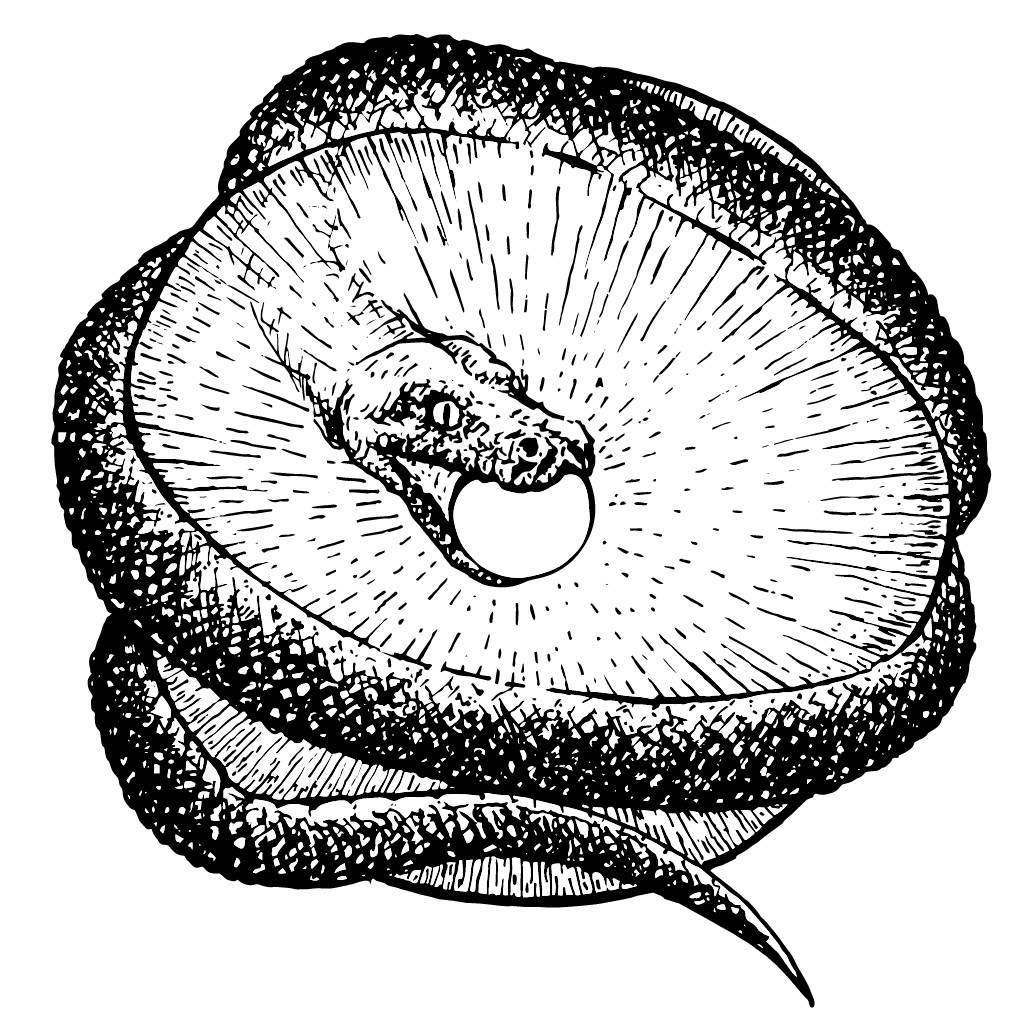
1 HH1: Could gravity be tubular-wormhole’s, entanglement-gravity one and the same thing?; nature coincides down to the smallest details—on literalness, names, the actor and labels: remembering depends on it, and so does the association of ideas.
There is no history that moves toward the future, a radical critique of progress: development, morphology, or progress toward the future does not exist; the sense toward the future is systole, energy without qualities, history is its diastole.
Poetry and history do not touch because they are joined; they are the two directions of character, the two directions of a unity; «spooky action at a distance»; what lacks qualities (undifferentiated energy), seen retrospectively, has a figure, only retrospectively.
There is no poetry without history and no history without poetry, just as there are no dreams not conceived with waking; the subtlety here is that what is joined (what is not opposed) does not interact through cause and effect but through sense, or differences of sense; there the other participates in the sense of the other when the other sense dominates; in the whole, circular succession, «eternal return».
Evolution by natural selection is retrospective; its part toward the future is emphatically poetic; the retrospective in that sense provides the frame, «contributes the die-cut», the figure.
2 The loss of the fear of death, as Saint Paul glimpsed, is related to the problem of the actor: it is labels that free us from fear; Goethe feels this liberation in Schiller, Nietzsche feels it at the end of Greek culture, in the problem of the actor.
3 «The stars are holes made in the firmament—this protects us from a blinding light»: but as Nietzsche saw clearly, they do not lead us to another world, we must not split the world in two: they are tubular entanglement-gravity.
4 Magic and perhaps all superstition (without criticizing either) is based, like «action at a distance», on the fact that those two things, whatever they may be, are already joined; it is based on seeing as separate what we should see as joined and distinguish only by sense; perhaps hypnosis and self-deception are based on this too.
5 Separating and distinguishing, rational perception vs. sensory perception. Superstition comes, or can come, from separating what we should distinguish.
6 On greater purity, as in half-sleep; there history weighs less, sleeping is a less historical movement (the systole of the day or diastole - the day’s poetic emphasis); so there it is not 50 and 50 of transparency?—does energy without qualities weigh more than history? (Perhaps not, it is just that history does not weigh more than 50%).
Potential and purity: with the attenuation of history, humanity will go much further; as soon as the weighting and opacity of history are lightened, does everything improve?
Health from heaviness: let history weigh with less weight and opacity and with more translucence.
No, one should not want to show every step we took to reach the result; that is a lie, one can only see the steps by looking backward forward…
7 When a problem is very difficult, history there is weighing with too much weight and opacity; time is a retrospective movement joined to a movement toward the future; there is no eternal return, the return is always temporal—and this is not absolute; “time” toward the future is poetry (energy without qualities, more poetry than history, certainly not more history than poetry): uncertainty is proportional to possibilities, history offers them duration, but it is not what offers timelessness; history lets us spend the timeless and energy, in time.
8 Sense must be taken into account, the problem of the observer; in the double-slit experiment, the only thing not taken into account is sense (senses and direction): time goes backward, not toward the future; the movement toward the future is energy without qualities; they are not opposites, they are the movement of systole and diastole of the same thing, as Heraclitus saw in his own way.
9 The double-slit problem is a problem of sense: there is no morphology toward the future; Nietzsche is right that Darwin is superficial in this; natural selection is done by history, it is the frame of undifferentiated energy.
Is the critique of progress much more radical than Goethe, Nietzsche, and Jünger think?
10 The impossible is an excess of history. Maximum uncertainty is proportional to maximum possibilities; time is only retrospective: there is no evolution toward the future, the critique of progress has not been radical enough. In the double-slit experiment, the problem of sense was left unresolved (both that of the observer and that of the direction of time): time is only retrospective. Action at a distance always presupposes a superstition, that is: separating what is already joined instead of distinguishing it, mistaking as two different things what is one same thing in two movements (systole and diastole of a heart); even the distinction between poetry and truth and between undifferentiated energy (future) and history (time) keeps the two joined but distinguished.
11 It is not so much that time cannot be recovered; in truth the human gaze is not retrospective; Schopenhauer got it wrong when he said the will is blind, in truth the will is dazzled: the sense toward the future is pure energy; only seen retrospectively (time, history) do possibilities feel like uncertainty. The critique of progress in Nietzsche and Jünger is not radical enough, in Nietzsche as eternal return (precisely that is not part of the will) and in Jünger as dependence on history.
12 «The spirit of gravity» implies assenting to being captured by gravity.
13 Only a translucent history makes «the great health» possible.
14 Poems and stories tell histories forward.
15 Petulance is seeing the mysterious, miraculous, divining, and divinizing as something that is no longer implicit and happening all the time; reality already depends on all of that.
16 «Morality kept falling behind», the opacity of history keeps growing; it is time for it to become more translucent: with light means the human being is a genius, because he already is a genius, except when faced with means, history, time without translucence.
17 People are annoying because they are not translucent, transparent.
18 There cannot be much uncertainty without many possibilities; possibilities move toward the future, uncertainty is retrospective, hence our certainty when looking back; poetry moves toward the future, history is retrospective; humanity is still not aware of this Copernican turn (it is half-aware of it); perhaps this is what best distinguishes the living from the dead, the living has the capacity to look more toward the future, it identifies with this.
6/10/22 - A lion is «alive and dead & alive or dead» (object), but life is not dead, so what is life?: it could be the greatest diameter––the most complete sphere represented in our neighborhood.
19 The capacity to see the past belongs to the future.
20 The key to doing things in reality is never to let go of the fish; let the fish be let go not by your conclusion but by history, which is seen, keeping you active, and not to conclude yourself when you have fulfilled your duty.
21 ∞ = from the line of real numbers, with the imaginaries we leave that line and simultaneously turn 90 degrees; but in the geometry of the infinity symbol that turn happens simultaneously (there are two simultaneous 90-degree turns), that is: the two straight lines that cross are, at the crossing, a representation of parallel 1/2, but represented as a crossing because of that simultaneity.
Here Einstein, the Jesus-style crossroads, and HDR meet. It is interesting how in the symbol of the cross the focus is on the crossroads; in the Egyptian one there is only one of the two turns; in the infinity symbol the fuller film is visible. This has to do with localization in general, and much more.
Symbols represent simultaneity well, toward the future, that is, simultaneously, two ninety-degree turns do not appear as parallels, although they are, but as a perpendicular crossing ∞.
The cross of life is a lame infinity symbol.
22 What is valuable in a piece of writing lies first in the author’s imagination and then in the reader’s imagination; the text is the symbol that makes it possible for this imagination to occur simultaneously, even though the reader imagines it after it was imagined and written by the author.
23 Nature coincides down to its smallest details; the problem of the decoupling of content and its appearance comes from how differently we experience something, or how differently it appears, when it is seen successively-incompletely or simultaneously, but we are seeing the same thing.
History is retrospective; that same line seen toward the future is undifferentiated energy (perfection), but they are the same; perhaps the universe as a whole also has history, so perhaps it is wrong to speak of multiple universes, and we should speak of multiple worlds, in one universe (at least for now), but as we have just said, speaking of world or universes is not only a matter of names, or if you like: it is only a matter of names, but names, as we said, change depending on whether we are seeing completely (simultaneous) or in a complete way: the infinity symbol, the cross of life, and the Christian cross are different levels of simultaneity.
24 There is a universal history, but it is not represented only through evolution by natural selection; forward there is neither history nor morphology nor evolution, this is an exclusively retrospective gaze; forward the universe moves perfectly, as undifferentiated energy; the perfect has no qualities. The mystery of totality still remains; forward we can do «anything» but not «everything».
25 Do we have different figures because we see the simultaneous and parallel from the real?, something like that.
26 When you are looking at reality, what you see is simultaneous and successive: the same thing is seen as parallel (succession) or simultaneous (crossroads); the real and the imaginary (the complex) lead it to that.
27 Perhaps space and time, or being polite (ladies first) we can say time and space, are the same thing but in a different direction; forward we see space, backward time; it is the same line from two perspectives that go in opposite directions and meet or cross.
28 What is fundamental for the great health is that problems are fully present, but with 50% translucence, fully present but light so they let the light pass through, which is the half toward the future of every human being. Schopenhauer said the will is blind, but in truth the will is dazzled; history, which is retrospective, supplies the shadows, but it is better if it does so at 50% transparency, otherwise life becomes too heavy; if the piano keys are not light, even a genius cannot play a good melody; Nietzsche, Jünger tells us, believed the will has goals, I believe the will is goal (something Nietzsche might perhaps criticize); the fact that when we look back behind the light that dazzled us we see figures, I do not know whether it implies that behind that light there were forms, figures, and if there are I think it is in a direction opposite to that of the light, retrospective, and when these two directions meet (infinity symbol, cross of life, Christian cross) a simultaneity of encounter is produced, similar to what we experience in half-sleep.
References
Hypothetical Hypothesis