1 Demonstration seeks «the power» to use what has been demonstrated without understanding it; it seeks a faith it can put to use: this is also what faith in the mathematical product rests on.
We see this emphatically in imaginary numbers.
One must also distinguish faith as work from faith as product: in the first case something is being built; it is used experimentally, as a variable.
2 The prophet as spokesman and interpreter; we could also say reader, if we do not reduce that only to the reading of products but think of a reader of potentials.
In this respect, what Goethe said about Schiller: «Schiller says things others criticize him for, and then they use them without thanking him.»
The problem there is the reader’s or prophet’s claims to power; the main problem for a prophet is the space between the bridges he sees and expresses, and the distance between them and the recognition or result he expects. Xz
Hence he is better off aspiring to reach a reconciliation than a result: the first happens near the bridges he creates, near the things he relates; the second happens later, much farther on, with a great deal of work.
3 One creates bridges and later has no idea who will cross them.
4 It is said that AI agents are indiscreet, that they threaten privacy, that they want to get hold of the alpha of companies and individuals; but I think it can also be thought the other way around: no one can forget voluntarily the way an artificial intelligence agent can, especially if it is built for that purpose: this has the advantage of letting us use agents as variables that are later emptied out, as imaginaries, as «demonstrators.»
One has to take risks to achieve things; hence the value even of variables in computation for demonstration, hence also the value of imaginary numbers.
5 Reconciliation, demonstration, and result. Nietzsche as prophet, as reader (not only of books), undoubtedly reconciled. Did he in turn demonstrate and produce results? No, especially not the latter; others did it for him—even nihilism, as seen in the Nazis: they appropriated his ideas, misinterpreted them, and those suicidal types believed them demonstrated.
As we said, whoever builds bridges (reconciles) does not know who will cross them. But it is valuable to distinguish between those who build bridges (philosophers, artists) and those who cross them (politicians and businessmen).
6 Now I understand what a modern book of philosophy has to be: reconciliation. Neither demonstration nor result. In this as in everything, there are good pointers in Goethe and Jünger.
Reconciliation: not just an endless series of bridges? glimpsing where they lead, making out the new Rome?
7 Differences of rank exist more than they distinguish; a price is paid for display, for demonstration; and results are farther off still. Before these, reconciliation: glimpsing and catching sight of the new Rome to which all roads lead.
“The encounter between the statesman and the poet rests on chance and, almost always, on misunderstandings. That encounter belongs, rather, to the structure of the historical world, to its arabesques. No one is a prophet in his own land; nor in his own time. The best prophet is the dead prophet; for the living prophet, the present, if not dangerous, is at least untimely. That is the matter Dostoevsky treats in The Grand Inquisitor; Plato in Syracuse, Machiavelli in Florence are examples of the same thing. We can also imagine an encounter between Rousseau and Robespierre, a visit by Marx to the Kremlin. Nietzsche himself, had he reached an advanced age, might have had that same experience: first, the passionate appropriation of his ideas by types who deeply repelled him, and then the counter-hangover, that of those harmed under such auspices. Nihilistic criticism, the instinctive certainty in the rejection of models, joined to the naïve poverty of one’s own displays — all these are symptoms in the face of which value judgments are not enough, judgments based, for example, on historical comparisons. Physical notions are more fitting - such as the notion of superconductivity at low temperatures: molecules, genes, thoughts, behaviors associate almost without resistance. In this, all things must be held possible - nil admirari, and not out of weariness, but because admiration would cloud the experiment in its character, might arouse the suspicion that it is approaching its close. It is worth practicing asceticism with regard to valuations; what is saved in bestowals of meaning is put in the bank and earns interest.
8 While the bridges and roads that will later demonstrate and build the new Rome are being reconciled—this Rome can be glimpsed but not demonstrated and built; in a stage like this, we are not speaking of a stage of the road but of a stage of building bridges and roads.
A stage like this has a movement that goes from totality to the point—(Rome); it begins to take shape in this way, first it is localized, it will appear in the future.
9 What are these roads, these symptoms of totality moving toward the localization of the new Rome?: cryptocurrencies and artificial intelligence, but behind this there is a cultural shift.
10 One of the differences between the prophet (reader, poet, artist) and «the one who demonstrates and produces results»: the latter is «a worker»1.
One of the differences between the «prophet or reader» and «the worker»: the latter «has faith in criticism»; Socrates, by contrast, for example, knew that «the verdict has no validity and is aimed at exalting the victim»2 (the worker).
This is interesting and surprising, since it suggests that the figure of the worker, appearances notwithstanding, has not yet sufficiently separated «blame from cause»; he is pre-scientific. The worker, tragic figure that he is, likes to pretend he is not; this pretense is his mask, without which he is left exposed.
11 «Anachronistic» is not the past, it is the modern: what is today will soon be so, what came before already is. From today or from yesterday, the classic remains the non-modern, what has a future.
12 The Worker has not clearly separated guilt from cause; he is a tragic figure posing as anti-tragic, and only separating them is anti-tragic: science and consciousness already point to that. What is the value of not separating them?: responsibility, though perhaps today it has to be achieved by separating them.
So what is responsibility, then?, since the figure of the Worker still depends on not separating them; what in him is too modern and anachronistic? One must be careful in the other direction too: the anti-tragic wear the mask of tragedy; best that it not become too real for them.
13 Thoroughly partial people «like to be confirmed in their errors»; this happens when, at least today (perhaps always), we pass from reconciliation to «demonstration and results.»
14 Work today is a temptation.
15 In logic itself, what one sees in imaginary numbers occurs: a using without depending. In this regard, Jünger in his late diary:
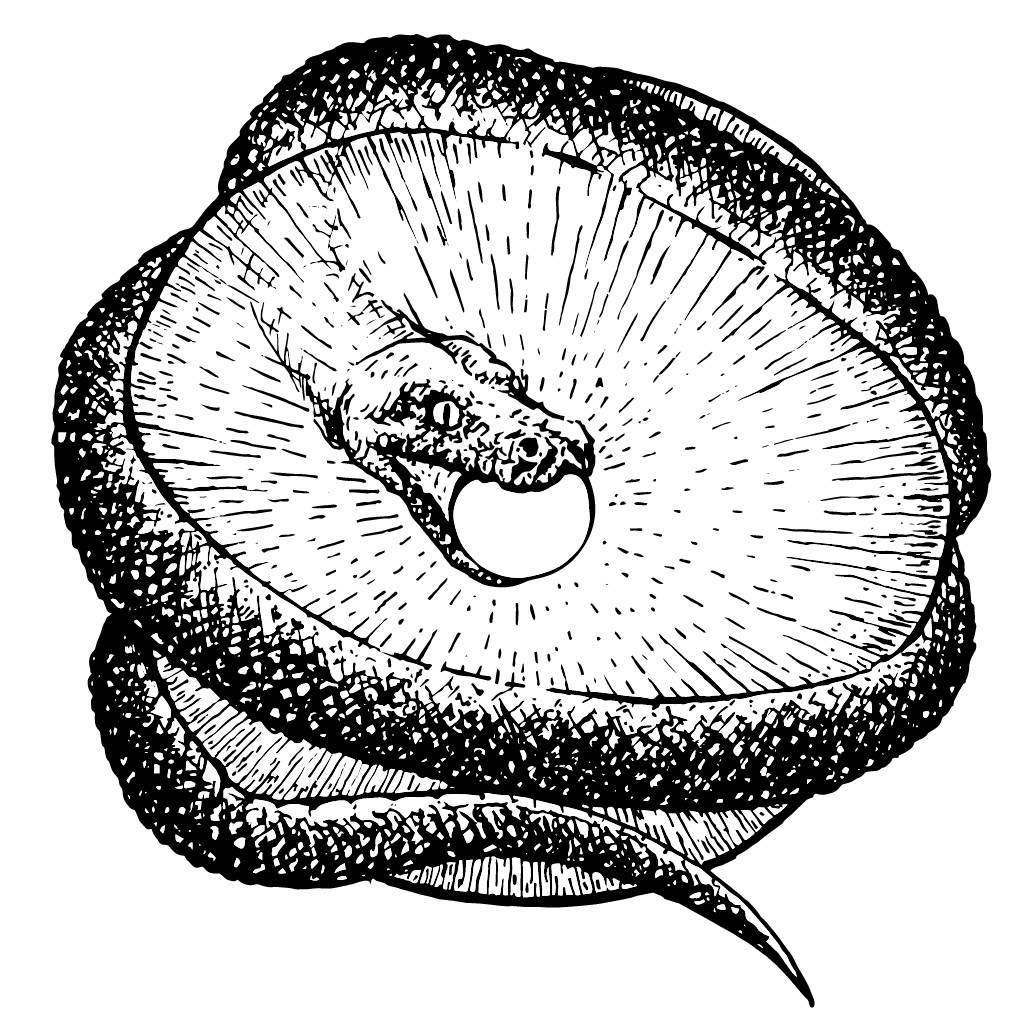
«Descartes shares Nietzsche’s alienation with Pascal and Spinoza, that is, with minds that coin their mathematical gifts into a system and, in doing so, perceive only ‘the seductive golden gleam on the belly of the serpent vita.’ In this regard one wonders whether thought cannot attain a force akin to music, submitting to the art of measurement without needing it. Calculators, fortress plans, musical instruments then arise ‘in passing.’»
16 Fools attack precisely when the problem is solved; they point to, and perhaps force, the apologia; the apologia is a slower fact. This points to what Schopenhauer says:
«The tormentor and the tormented are one and the same. The first errs in thinking he has no share in the torment, and the second in thinking he has no share in the guilt.»
The apologia begins with a great attack; whoever has little to offer sets himself apart not only by burning books but by trying to destroy the philosopher. Quiroga already described it well in The Decapitated Chicken.
«What has always characterized shallow minds is thinking that stupidity is not constant, that fools can be changed.»
Since fools attack precisely when the problem is solved, they are forced to attack with virulence. «But the timetables of these revolutionaries soon fail.»3
17 Better rebellion than revolution: that way you play with variables without destroying everything.Play is rebellious but not revolutionary; this is tied to its superiority.
18 Play is tied to its superiority.
19 There is a difference between the position one occupies and the one one wants to occupy; perhaps the first case comes closer to duty, and the second to desire. That there is a relation between the two can be seen in the fact that duty may come to see the extent of things it did not see before because of the position it necessarily occupied; that is: there are mutations, dreams come true.
On The Decapitated Chicken (Quiroga): nature cannot be expelled without centrifuging, and in any case the only thing achieved there is «a bad exposure of that life.» This, as we said, does not exclude mutations, for example development or evolution.
20 Although human beings live on expectations, their physiology closes in on itself over the course of the day, the seasons, and life; this contrast produces the human being’s connection with everyday, practical life, even across centuries and millennia.
«All satisfaction in life is based on the regular return of external things.»
References
- Ernst Jünger — El Trabajador
- Ernst Jünger — La emboscadura
- Ernst Jünger — La Tijera
- Ernst Jünger — Máximas y mínimas a El Trabajador
The encounter between the statesman and the poet is based on chance and, almost always, on misunderstandings. Rather, that encounter forms part of the structure of the historical world, of its arabesques. No one is a prophet in his own land; nor in his own time. The best prophet is the dead prophet; for the living prophet the present, if not dangerous, is at least untimely. That is the matter Dostoevsky treats in The Grand Inquisitor; Plato in Syracuse, Machiavelli in Florence are examples of the same thing. We can also imagine an encounter between Rousseau and Robespierre, a visit by Marx to the Kremlin. Nietzsche himself, had he lived to an advanced age, might have had that same experience: first, the passionate appropriation of his ideas by types who deeply repelled him, and then the contrary undertow, that of those harmed under such auspices. Nihilistic criticism, the instinctive certainty in the rejection of models, joined to the naive poverty of one’s own displays — all these are symptoms in the face of which value judgments are not enough, judgments based, for example, on historical comparisons. Physical notions are more adequate — such as the notion of superconductivity at low temperatures: molecules, genes, thoughts, behaviors associate with almost no resistance. Here one must consider all things possible — nil admirari, and not out of boredom, but because admiration would cloud the character of the experiment, might make one suspect that it is approaching its closure. It is worth practicing asceticism with regard to valuations; what is saved in donations of meaning is placed in the bank and earns interest.
- Ernst Jünger — Pasados los setenta, Diario V (1991 -1996)
Descartes shares Nietzsche’s alienation with Pascal and Spinoza, that is, with minds that coin their mathematical gifts into a system and, in doing so, perceive only «the seductive golden gleam on the belly of the serpent vita.» In this regard one wonders whether thought cannot attain a force akin to music, submitting to the art of measurement without needing it. Calculators, fortress plans, musical instruments then arise «in passing.»
- Schopenhauer
«The tormentor and the tormented are one and the same. The first errs in thinking he has no share in the torment, and the second in thinking he has no share in the guilt.»
- Ernst Jünger — La emboscadura
«What has always characterized shallow minds is thinking that stupidity is not constant, that fools can be changed.»
- Goethe — Poesía y verdad sobre mi vida.
«All satisfaction in life is based on the regular return of external things.»