1 Is defensive inhumation much easier than offensive inhumation? This too may be relative, a matter of perspective, depending on the cases and the position one occupies: a more static one vs. a dynamic one.
If the innate or preferred position is the static one, it will show in the ease of responding to attacks from a surrounding present group. The position we occupy vs. the one we want to occupy.
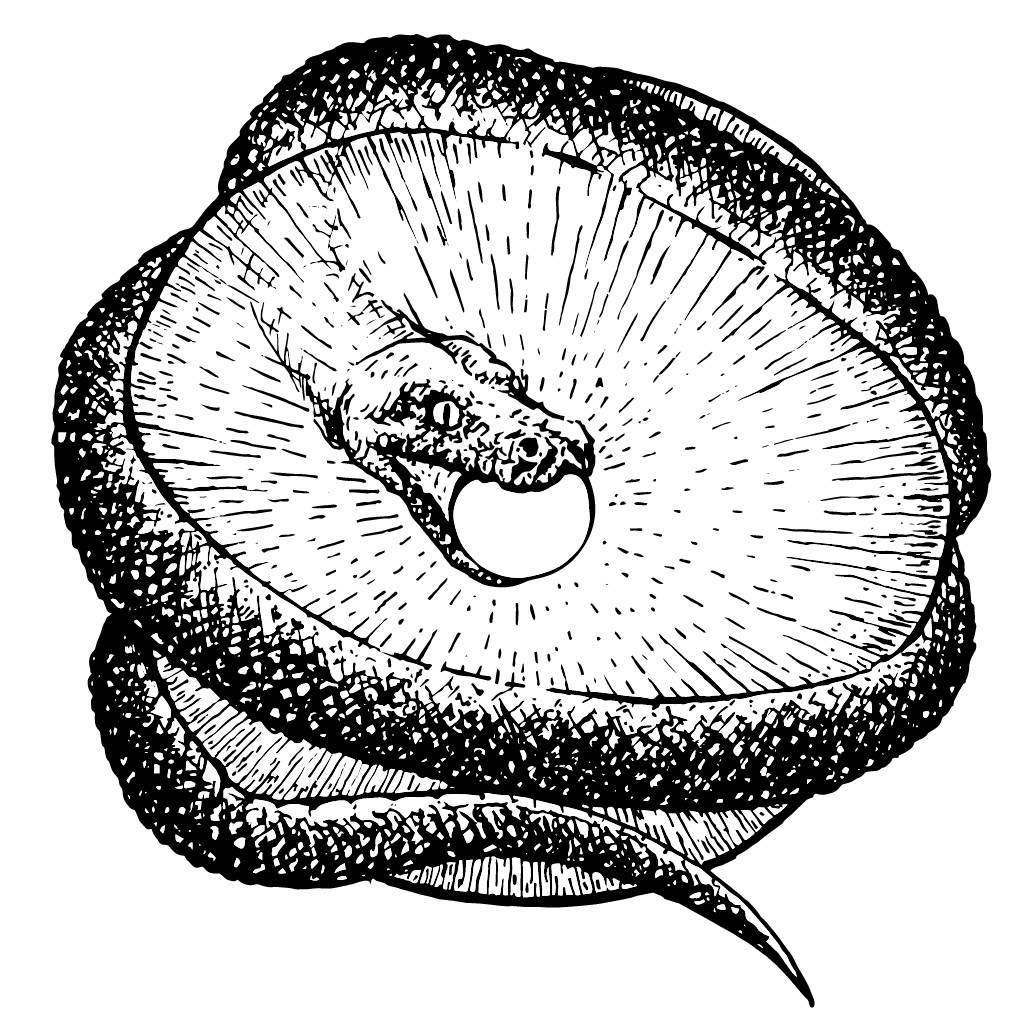
“In the knot rests the compulsion of fate, the dark interweaving of mysteries, the human being’s helplessness before the oracle’s sentence. If we look a little more closely at the knot, we will see the serpent’s rings gleaming in it. Once again that animal is defeated, in which the telluric power of Gaia appears. No doubt we can also make out that animal, the serpent, in the Python of the Greeks, in the monsters and dragons of legend, in the Midgard serpent of the Germanic world. In the Labyrinth too, into whose depths Theseus descends, that same violence is at work, which we find again in the head of Medusa, severed by Perseus, solar prince. What the sword is for Alexander the Great, the polished shield with which he reflects the terrifying image is for Perseus. That sword and that shield are weapons of consciousness, which is what breaks the telluric compulsion. With the killing of the serpent there begins in the West the path of the authentically powerful man, that is: of the man endowed with mythical powers. By killing a serpent, Heracles proves, already in the cradle, that he is a prince.”
2 Telluric compulsion, seen this way, is not the knot’s—the knot is only the means the earth uses for its compulsion, that is: the earth’s compulsion can be overcome completely; Gaia can only be overcome relatively, that is: by giving her her place. Shield and sword: placement has more to do with the shield, with the defensive position.
3 Every fundamental attack is relative; actions, on the other hand, can be pruned, since they do not hold much undistributed force.
4 One not only reaches the higher thing barely with the tips of one’s fingers—it is from them, too, that the fruits hang. Because in these cases is that where the fruits appear?: fruits are related to what we barely manage to attain, insofar as both are endings; in the tree it occurs in the branching, in the fruit, which hangs from these branches, in the closing into a roundness.
“The statesman must be guided neither by the ideals of the poet nor by the ideas of the thinker, especially when events pile up, and this even apart from the fact that both poet and thinker are significant rather for a future world than for the present one. The courts of the Muses are courts of princes who have time. > This does not mean that he need not take the model into account.”
This does not mean the model need not be taken into account.
“In the fight, Heracles notices something odd. Every time he throws Antaeus to the ground, the guy gets up stronger, as if the earth were recharging him. So Heracles changes strategy. He grabs him around the waist, hoists him up, squeezing him with brutal force, and holds him off the ground. And up there in the air, without contact with Gaia, with the earth, Antaeus begins to weaken, to choke, to, fade... and Heracles simply keeps holding him tight until he stops resisting. It is a turn of wit more than brute force.”
Etymology of Antaeus: «facing, against, in opposition to»1.
5 We have already said that Antaeus can be defeated but not Gaia; otherwise we would deprive ourselves of paradise on earth, the best place to live.
Antaeus «seems» invincible; his strength comes from «appearing, showing himself, becoming visible.» And he recovers his strength because when he stops seeming, it turns out that behind him stands the force of the earth, that is: he is invincible only while he appears and disappears.
If we see Antaeus as the Gordian knot, as the serpent as Jünger understands it in the passage above, both sword and shield coerce that very appearing and disappearing.
“The shield: Medusa petrified anyone who looked at her directly. Perseus avoids doing so by using the polished shield as a mirror—depending on the version, provided by Athena—and in it watches Medusa’s reflected image as he approaches and beheads her. The important thing is that the reflection does not retain the petrifying power of the gaze: Perseus can look at Medusa’s image in the shield without turning to stone.”
6 In Perseus’s case, defense is an auxiliary means; he too ends the problem by using the sword.
7 From a certain position, the challenge lies in the lack of water; above all in that position we are describing, it is the lack of water in practical life, in this sense:
“It is a pity when someone burns their powder too soon. The pressure to express oneself lacks a counterweight. Early brilliance. The trout leap out of the water and are caught in the air. Their brilliance blinds. Had they been released into the water, their weight would have increased…”
8 The cutting of the Gordian knot, Heracles’ victory and Perseus’s, are means to an end: ends in themselves, by contrast, are relative. The fundamental cannot be overcome absolutely, only relatively. Fundamental victory, too, is relative. So long as we speak in absolutes, we are in a position adjacent to means, not in one adjacent to foundations.
References
- ChatGPT
- Ernst Jünger — El nudo gordiano
In the knot rests the compulsion of fate, the dark interweaving of mysteries, the human being’s helplessness before the oracle’s sentence. If we look a little more closely at the knot, we will see the serpent’s rings gleaming in it. Once again that animal is defeated, in which the telluric power of Gaia appears. No doubt we can also make out that animal, the serpent, in the Python of the Greeks, in the monsters and dragons of legend, in the Midgard serpent of the Germanic world. In the Labyrinth too, into whose depths Theseus descends, that same violence is at work, which we find again in the head of Medusa, severed by Perseus, solar prince. What the sword is for Alexander the Great, the polished shield with which he reflects the terrifying image is for Perseus. That sword and that shield are weapons of consciousness, which is what breaks the telluric compulsion. With the killing of the serpent there begins in the West the path of the authentically powerful man, that is: of the man endowed with mythical powers. By killing a serpent, Heracles proves, already in the cradle, that he is a prince.
- Ernst Jünger — El Trabajador
The statesman must be guided neither by the ideals of the poet nor by the ideas of the thinker, especially when events pile up, and this even apart from the fact that both poet and thinker are significant rather for a future world than for the present one. The courts of the Muses are courts of princes who have time. > This does not mean that he need not take the model into account.
- ChatGPT
In the fight, Heracles notices something odd. Every time he throws Antaeus to the ground, the guy gets up stronger, as if the earth were recharging him. So Heracles changes strategy. He grabs him around the waist, hoists him up, squeezing him with brutal force, and holds him off the ground. And up there in the air, without contact with Gaia, with the earth, Antaeus begins to weaken, to choke, to, fade... and Heracles simply keeps holding him tight until he stops resisting. It is a turn of wit more than brute force.
- ChatGPT
The shield: Medusa petrified anyone who looked at her directly. Perseus avoids doing so by using the polished shield as a mirror—depending on the version, provided by Athena—and in it watches Medusa’s reflected image as he approaches and beheads her. The important thing is that the reflection does not retain the petrifying power of the gaze: Perseus can look at Medusa’s image in the shield without turning to stone.
- Ernst Jünger — Pasados los setenta, Diario V (1991 -1996)
It is a pity when someone burns their powder too soon. The pressure to express oneself lacks a counterweight. Early brilliance. The trout leap out of the water and are caught in the air. Their brilliance blinds. Had they been released into the water, their weight would have increased…