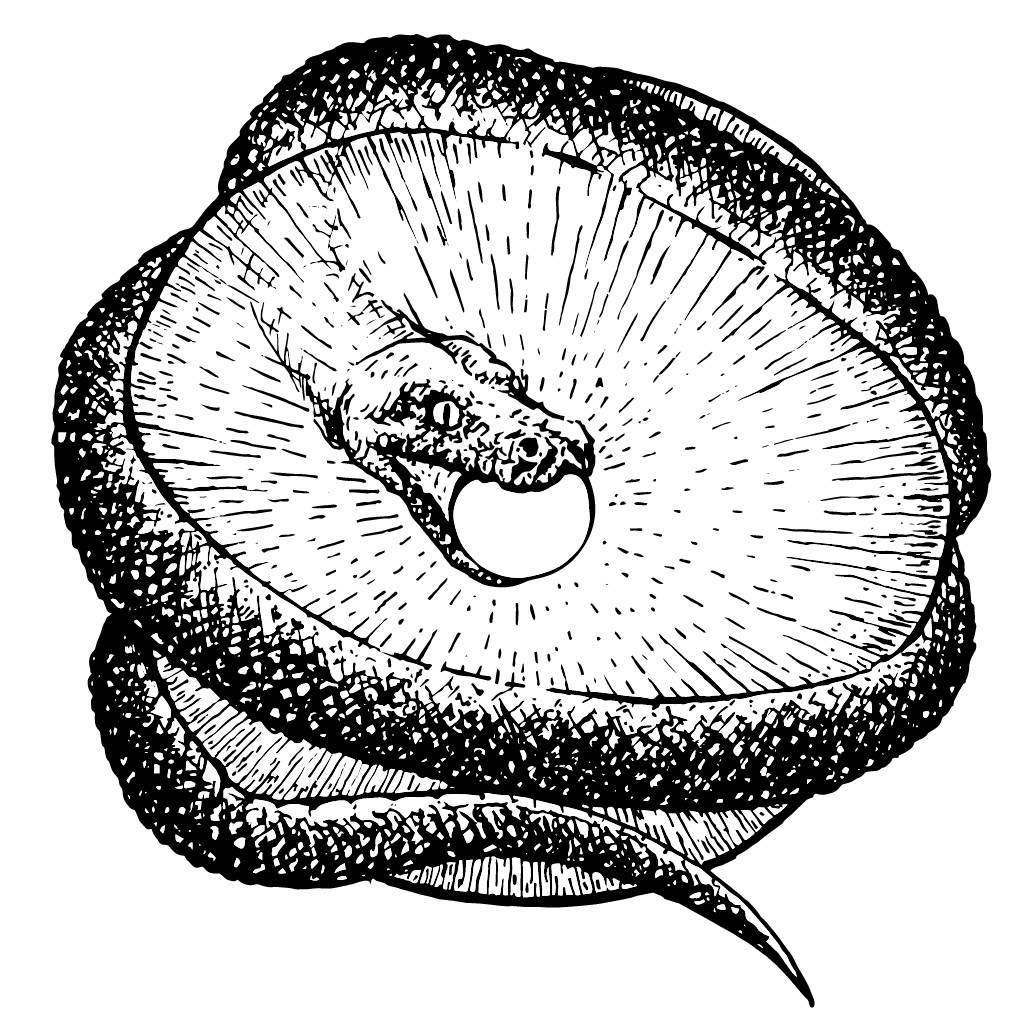
1 You let time go by, decisions go by; you don’t realize that in the «figure» there is much more than form, there is also timelessness. Don’t forget that «the general is only something within the whole».
“Weak minds make the mistake of jumping straight from the particular to the general, when in fact the general can only be found in the whole.”
2 Perhaps she (the figure), for example ex negativo in her absence, drives us from birth toward suspicion and hope.
So form, which came so easily to you, contains a figure; its mystery is the arithmetic that governs—even all algebra discovered up to our day. There is still much more in 0.
3 To great things we give their place and they give us ours, and in that way we thank them.
A sunflower facing the void would be strange; it is an image we sense when we look up, even across the desert.
Humans, even if we are as short-sighted as Akhenaten, are like inverted trees: hands and feet are our branches, our brain our sun-roots.
4 Superficiality may not be sacred, but the surface is — it is a sanctuary: in it we see reflected in figures the totality that determines the point, «the universal in the particular»1.
There are also things in the universe, «the particular in the universal», but in their figure, «the universe in things»; and how could it not be so? And if it is so, how could that mystery hidden in things not be the most absolute thing?
5 Probability is already a quantification of possibilities.
6 «Sensory perception and rational perception»,2 suspicion and confirmation, figure and recognition.
7 In logical distinction lies the discipline of not treating the void as a figure, of not killing the messenger, of not being ruined by the means we use.
“Descartes shares Nietzsche’s alienation with Pascal and Spinoza, that is, with minds that mint their mathematical gifts by shaping them into a system and, in doing so, perceive only «the seductive golden gleam on the belly of the serpent vita». In this regard one wonders whether thought cannot attain a force akin to music, submitting to the art of measurement without needing it. Calculators, fortress plans, musical instruments then arise «in passing».”
8 «I don’t know what it means, but when I’m exhausted, maybe at the end of the day, when I’ve spent all my energy, it seems to me you’re right; but in the morning, when I’m full of energy, it seems to me you’re not right". «Dawn and dusk…respect and distance…there is one religion for good times and another for bad times…it’s a matter of perspective…dusk is dawn somewhere else3». The best things are judged relatively.
“On self-criticism: the author reading a text of his own that he has forgotten: «If someone else had written it, it would be good».”
9 Is it the timeless that makes coming and going insufficient?
10 We mistake the effect for the cause. Of course every effect is a cause, but a much weaker and more diluted one. Mathematics and logic as most people understand them are an effect, not a cause.
“It does not follow from this that the hunter who kills a wild animal must also be the cook who prepares it for dinner. By chance, a cook might also go hunting and shoot well. But he would draw the wrong conclusion if he thought that, in order to shoot well, one must be a cook.
That is how mathematicians appear to me when they maintain that, when it comes to physical things, one is incapable of seeing or discovering anything unless one is a mathematician. They should be satisfied if someone brings them something to the kitchen, so they can sprinkle it with their formulas and prepare it as they please.
11 The vocation project, as education has conceived it, is nonsense: history is not short of great human beings; they are few per century, but for an educational project there are enough.
Why don’t we do it more deliberately?: we confuse the modern with the valuable, when throughout all of history the modern lasts no longer than fashions do.
12 The revolutionary’s problem: he does not want to see, but to see how he sees; that is, he begins to doubt the means he has for his end.
«He resembles those revolutionaries who appoint generals and then laugh at them»4. The problem of killing the messenger.
The great suspicion is not only in others but in us, even as error; that suspicion is the figure of the totality implied in each particularity. We experience this from birth.
13 Personal hope is worth ten times less than universal hope.
14 Time makes us relative; it also makes us all familiar. The best way to deal with it is not even to ignore it, but to accept it, answer it: to make it relative too.
15 The force of loving someone can be greater than that person’s relative value.
It relativizes everything: like it or not, it sees everything as sacred, and therefore everything as equally sacred; by contrast there are more absolutist people, who see everything as less sacred—this does not mean they have no desire for the sacred.
Each perspective has its advantages and disadvantages; perhaps we can occupy each position when it suits us, in keeping with the flow of life.
16 Wanting to stand out by means of something ordinary is a contradiction; this does not mean that standing out, by means of something ordinary, is a contradiction.
17 It is interesting (it produces interests) to see how everything that constitutes unease and bad conscience consists of images that need not be accompanied by unease; they could just as well go with well-being. This shows that there is association and contiguity without causal necessity. Unease is added afterward; it need not be added. Does the same happen with love of fate?
“All joy wants the eternity of all things, wants honey, wants lees, wants drunken midnight, wants tombs, wants tomb-tears’ comfort, wants gilded evening glow. What does joy not want? It is thirstier, more cordial, hungrier, more terrible, more secret than all woe; it wants itself, it bites into itself, the ring’s will strives in it; it wants love, it wants hatred, it is overrich, gives, throws away, begs that one might take it, thanks the taker, it would like to be hated; so rich is joy that it thirsts for woe, for hell, for hatred, for disgrace, for the cripple, for world—this world, oh, you know it! You higher men, for you it longs, joy, the intractable blessed one—for your woe, you failures. All eternal joy longs for failures. For all joy wants itself, hence it also wants agony. O happiness, O pain! Oh, break, heart! You higher men, do learn this, joy wants eternity. Joy wants the eternity of all things, wants deep, wants deep eternity.”
This also applies to the things that trouble us or that we do not want to accept. The best, sooner or later, come to live this way.
18 How many are there who are not moralists, «who can use things and theories without depending on them»; how many free the image and leave on the ground the defeated means that helped them reach it?
19 Today’s limit will be tomorrow’s, but the same applies to the unlimited: here too the value of the figure we can intuit in the form of the things around us becomes visible.
Perhaps every person is born split down the middle, with two realities that we do not «know», but that as children we can reconcile. Religion and art are, in this respect, the higher capacity of the human being, and different people resolve this in different ways or «with a different style».
20 Images need not be accompanied by unease, and without images there should be no unease. Of course images can be very subtle, the product, for instance, of a deep interpenetration with the environment. But then there are images, and images need not be accompanied by unease—since in that there is a contradiction, that is, an unease introduced into that image from an unease foreign to it. This is what the value of prime numbers consists in: in their range distribution they avoid unease and keep their distribution free of it.
There is an immense superiority in being confirmed in our successes, compared with «being confirmed in our errors»—as parties and partisans like to do.
“The type of the persecutor, not the nature of the partialities, is what must not be lost sight of. Parties change and persecution remains. The courts follow politics as vultures follow armies. A great thrust at a dead Moor.
In avalanches either there is only décadence or there is no décadence. The nature and extent of my dependence on history I betray by attributing this or that to décadence and, above all, by my indignation. Independence and cynicism must in turn be distinguished, and done so with benevolence.
Both the hummingbird that kisses the hibiscus flower and the hummingbird that lies in the gray dust and is gnawed by worms are at an equal distance from hidden beauty; both are motifs for the painter, not his aim. In their image we glimpse the golden explosions of the worms.
Vertiginous consumption, of thoughts too, within acceleration. Related to this is the difficulty posed by terminologies that are abused even before they have been properly thought through and thought over. But one must not be afraid to use them: it is one more test. In this way one gets rid of most fools. Parties do not want to know what things they have in common; they want to be corroborated in their errors.
21 For some people it is very easy to be polemical; they are so even when they try not to be. There are times, perhaps ours is one of them, when everything is debated: being polemical today is easy; and yet people keep saying that there are people who seek controversy, which in this age would be nonsense: it happens by itself.
22 Philosophy will keep increasing in value for humanity over the coming decades; this is based on the fact that what it offers is «a plot of land in which to dig for gold»5; it offers people and AI models certain limits within which to search infinitesimally for the solution to problems, if we want to think in terms of problems.
References
- Goethe
- Ernst Jünger — La tijera, Af 61.
- Ernst Jünger
- Ernst Jünger — La Tijera, Af. 227.
- Ernst Jünger — La Tijera, Af. 214.
- Goethe — Máximas y reflexiones
Weak minds make the intellectual mistake of jumping straight from the particular to the general, when in fact the general can only be found in the whole.
- Ernst Jünger — Pasados los setenta, Diario V (1991 -1996)
Descartes shares Nietzsche’s alienation with Pascal and Spinoza, that is, with minds that mint their mathematical gifts by shaping them into a system and, in doing so, perceive only «the seductive golden gleam on the belly of the serpent vita». In this regard one wonders whether thought cannot attain a force akin to music, submitting to the art of measurement without needing it. Calculators, fortress plans, musical instruments then arise «in passing».
- Ernst Jünger — Pasados los setenta, Diario V (1991 -1996)
On self-criticism: the author reading a text of his own that he has forgotten: «If someone else had written it, it would be good».
- Goethe — de una traducción al ingles por David W. Wood
It does not follow from this that the hunter who kills a wild animal must also be the cook who prepares it for dinner. By chance, a cook might also go hunting and shoot well. But he would draw the wrong conclusion if he thought that, in order to shoot well, one must be a cook. That is how mathematicians appear to me when they maintain that, when it comes to physical things, one is incapable of seeing or discovering anything unless one is a mathematician. They should be satisfied if someone brings them something to the kitchen, so they can sprinkle it with their formulas and prepare it as they please.
- Friedrich Nietzsche — Nietzsche, Friedrich. The Portable Nietzsche
All joy wants the eternity of all things, wants honey, wants lees, wants drunken midnight, wants tombs, wants tomb-tears’ comfort, wants gilded evening glow. What does joy not want? It is thirstier, more cordial, hungrier, more terrible, more secret than all woe; it wants itself, it bites into itself, the ring’s will strives in it; it wants love, it wants hatred, it is overrich, gives, throws away, begs that one might take it, thanks the taker, it would like to be hated; so rich is joy that it thirsts for woe, for hell, for hatred, for disgrace, for the cripple, for world—this world, oh, you know it! You higher men, for you it longs, joy, the intractable blessed one—for your woe, you failures. All eternal joy longs for failures. For all joy wants itself, hence it also wants agony. O happiness, O pain! Oh, break, heart! You higher men, do learn this, joy wants eternity. Joy wants the eternity of all things, wants deep, wants deep eternity.
- Ernst Jünger — Máximas y mínimas a El Trabajador
The type of the persecutor, not the nature of the partialities, is what must not be lost sight of. Parties change and persecution remains. The courts follow politics as vultures follow armies. A great thrust at a dead Moor. In avalanches either there is only décadence or there is no décadence. The nature and extent of my dependence on history I betray by attributing this or that to décadence and, above all, by my indignation. Independence and cynicism must in turn be distinguished, and done so with benevolence. Both the hummingbird that kisses the hibiscus flower and the hummingbird that lies in the gray dust and is gnawed by worms are at an equal distance from hidden beauty; both are motifs for the painter, not his aim. In their image we glimpse the golden explosions of the worms. Vertiginous consumption, of thoughts too, within acceleration. Related to this is the difficulty posed by terminologies that are abused even before they have been properly thought through and thought over. But one must not be afraid to use them: it is one more test. In this way one gets rid of most fools. Parties do not want to know what things they have in common; they want to be corroborated in their errors.